What it is
Thuy Dien Ialy (Ialy Hydropower Plant) sits on the Se San River in Chu Pah district, about 50 km northwest of Pleiku city in Gia Lai province. Completed in 2002, it was Vietnam (베트남 / 越南 / ベトナム)'s largest hydropower station at the time — the dam wall stretches roughly 1,040 meters across and rises 69 meters above the riverbed. The reservoir behind it created a lake sprawling over 64 square kilometers through valleys of basalt and laterite soil.
This isn't a conventional tourist attraction with ticket counters and souvenir shops. It's an engineering landmark surrounded by the kind of quiet, undeveloped highland landscape that most visitors to Vietnam never see.
Why travelers go
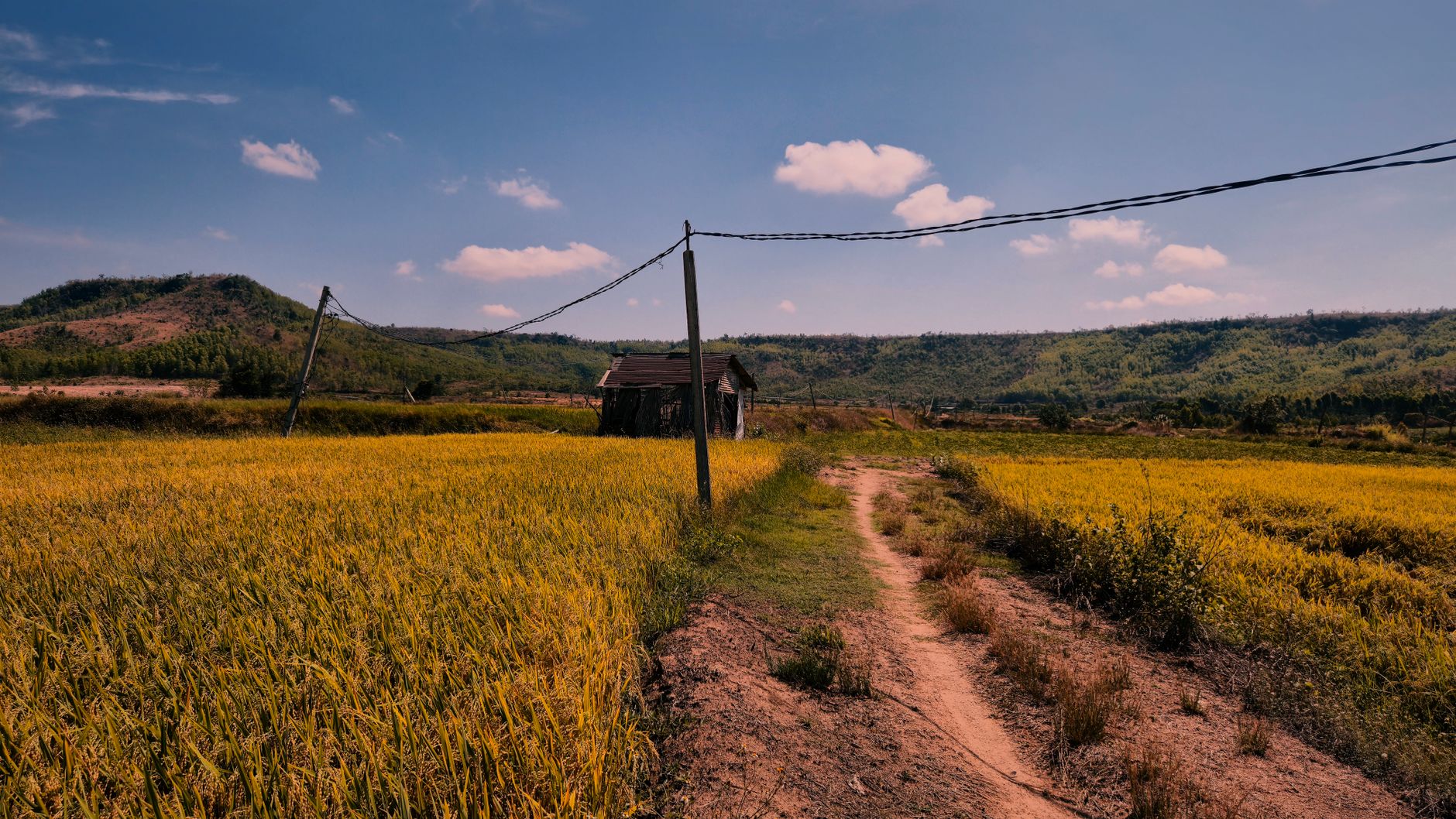
Most people end up at Ialy because they're already exploring Gia Lai — maybe on a motorbike loop through the Central Highlands (중부 고원 / 中部高原 / 中部高原) from Da Lat to Kon Tum. The dam itself is visually striking during discharge season when water thunders through the spillways, sending mist clouds across the valley. Outside of that, the draw is the surrounding area: Jarai and Bahnar villages, coffee and pepper plantations rolling over gentle hills, and a reservoir that locals use for fishing.
It's the kind of place where you stop because the road brought you there, and you stay an extra hour because the light hitting the red earth at 4 PM is something you didn't expect.
Best time to visit
The Central Highlands have two distinct seasons. Dry season (November–April) means easier roads, less mud, and clear views of the dam and reservoir. But if you want to see the spillways in action, aim for the tail end of rainy season — September to early November — when the reservoir is full and engineers release water. The discharge is genuinely impressive, though access to the base of the dam can be restricted during heavy releases.
Avoid June–August if you're on a motorbike. The roads around Chu Pah get slick, and afternoon downpours are almost guaranteed.
How to get there
From Pleiku: Take Highway QL14 Road in parts) north toward Kon Tum for about 20 km, then turn west onto provincial road DT661 toward Ia Ly commune. Total distance is roughly 50 km, taking about 1.5 hours by motorbike or car.
From Kon Tum: Head south on QL14 about 30 km, then follow the same DT661 turnoff west. Around 1 hour 15 minutes total.
From Da Nang or Hoi An: You'll need to get to Pleiku first. Flights from Da Nang to Pleiku run daily (Vietnam Airlines, VietJet) and take 50 minutes. Alternatively, buses from Da Nang take 7–8 hours via Quy Nhon.
There's no public bus directly to the dam. You'll need your own wheels — a rented motorbike from Pleiku (150,000–200,000 VND/day for a Honda Wave) or a hired car with driver (around 1,200,000 VND for a half-day trip).

Photo by HONG SON on Pexels
What to do
The dam viewpoint
The main viewpoint is on the east side of the dam crest. You can walk or ride across the top of the dam wall — it doubles as a road — and look down at the discharge channel on one side and the reservoir on the other. Photography is technically restricted in some zones (look for signs), so keep your camera casual near the powerhouse buildings.
Ialy Reservoir
The lake behind the dam is calm and wide, flanked by hills covered in wild grass and scattered eucalyptus. Some local fishermen will take you out on a small boat for 100,000–150,000 VND per hour if you ask around the small landing near the dam's west bank. Bring your own water and snacks — there's nothing out there.
Surrounding villages
The Jarai communities around Chu Pah district still maintain traditional "rong" houses (communal longhouses with dramatic peaked roofs). The village of Plei Bong, about 8 km south of the dam, has some of the best-preserved examples. Be respectful — ask before photographing people, and don't enter a rong house uninvited.
Coffee plantations
Gia Lai is robusta country. If you pass a farm and see workers sorting cherries (harvest runs November–January), you can usually wave and they'll let you look around. The vietnamese coffee from this region is strong, earthy, and nothing like what you get in Hanoi's tourist cafes.
Where to eat
Options near the dam itself are limited to a couple of roadside "com binh dan" stalls (rice with whatever's in the pots — expect 35,000–50,000 VND). For better food, eat in Pleiku before or after your visit:
- Quan Nha Gỗ on Hung Vuong Street — grilled meats and highland vegetables. Try the grilled pork neck with "com tam" (broken rice), around 55,000 VND.
- Pho Chua Gia Lai near Pleiku market — a local sour pho variant with fermented rice noodles, tamarind broth, and pork. Not the Hanoi-style pho you know. About 40,000 VND.
- For breakfast, find a "banh mi" cart on Tran Phu Street. The Pleiku version often includes pate, cha lua, and pickled papaya. 20,000–25,000 VND.
Where to stay
There's no accommodation at the dam. Stay in Pleiku:
- Hoang Anh Gia Lai Hotel — the nicest option in town, around 600,000–800,000 VND/night. Clean, central, decent breakfast.
- Duc Long Gia Lai Hotel — mid-range, 400,000–550,000 VND. Nothing fancy but reliable.
- Nha Nghi (guesthouses) along Le Loi Street — basic rooms for 200,000–300,000 VND. Fine for one night if you're just passing through.

Photo by Quang Nguyen Vinh on Pexels
Practical tips
- Bring sunscreen and a hat. The highlands sit at 700–800 meters elevation but the sun is still strong, especially on the open dam crest.
- Fuel up in Pleiku. There are a couple of gas stations on DT661, but they can be closed midday.
- Phone signal (Viettel, Mobifone) is reliable at the dam and along the main road, but drops in some of the valleys around the reservoir.
- If you're riding a motorbike, the road surface on DT661 is mostly decent asphalt, but watch for gravel patches and wandering buffalo.
Common mistakes
- Showing up expecting a tourist site. There's no visitor center, no English signage, no cafe with a view. This is infrastructure in a rural area. Calibrate expectations accordingly.
- Not checking discharge schedules. If seeing the spillways in action matters to you, ask at your hotel in Pleiku the night before — locals usually know when releases are happening.
- Skipping the surroundings. The dam alone is a 30-minute stop. The area around it — the villages, the reservoir, the empty roads — is where the real time goes. Budget a half-day minimum.
Final note
Ialy won't make anyone's top-10 list of Vietnam destinations. But if you're already threading through the Central Highlands — maybe on a ride between Da Lat and Kon Tum — it's a worthwhile detour into a landscape that feels genuinely remote, even though Pleiku is just an hour away.
Last updated · May 29, 2026 · independently researched, never sponsored.